
- soolantra
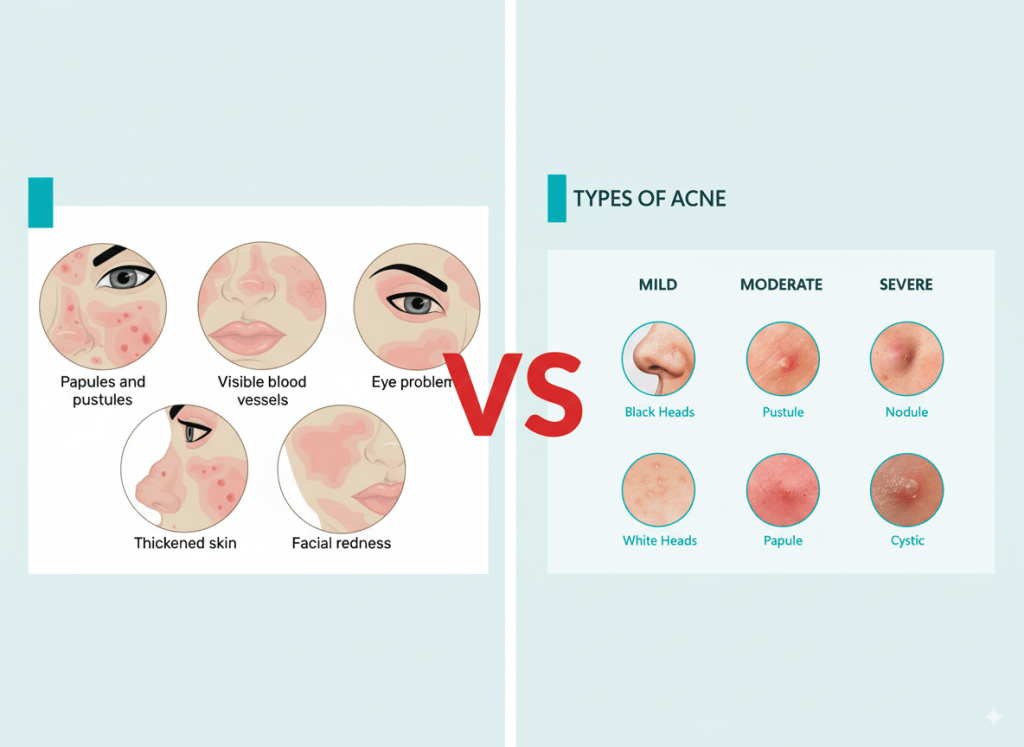
Acne or Rosacea? 5 Key Differences You Need to Know
- By Mark
| Feature | Acne | Rosacea |
|---|---|---|
| Hallmark Lesion | Blackheads and whiteheads (comedones) | No comedones; red bumps and pustules instead |
| Redness Pattern | Local redness around pimples | Persistent central redness and flushing |
| Visible Blood Vessels | Not common | Often present (telangiectasia) |
| Age of Onset | Mostly teenagers; can affect adults | Usually starts after age 30 |
| Body Location | Face, chest, back, shoulders | Central face (cheeks, nose, chin, forehead); sometimes eyes |
| Common Triggers | Hormones, stress, diet, oily products | Sun, heat, alcohol, spicy food, stress, harsh skincare |
| Skin Sensations | Pimples may be painful, but no burning | Burning, stinging, sensitive skin |
1) The Type of Bumps on Your Skin
Acne: The hallmark is the comedo (blackheads and whiteheads). These clogged pores start every acne breakout. From there, pimples, pustules, or cysts can form.
Rosacea: Rosacea bumps can look like acne, but there are no blackheads or whiteheads. Rosacea shows persistent redness, flushing, and sometimes pus-filled bumps.
Quick tip: If you see blackheads or whiteheads, it’s likely acne. If not, rosacea is more likely.
2) The Root Cause
Acne: A “plumbing” issue—pores get clogged with oil, dead skin cells, and bacteria, causing inflammation.
Rosacea: An “alarm” issue—the skin’s immune and vascular systems overreact, leading to flushing, redness, and sensitivity.
3) Age of Onset
Acne: Most common in teenagers, but adults can get it too (especially women due to hormones).
Rosacea: Usually starts after age 30 and is common in fair-skinned adults.
4) Where It Appears
Acne: Shows up in oily areas—face, chest, back, and shoulders.
Rosacea: Mostly central face—cheeks, nose, forehead, and chin. Some people develop ocular rosacea that affects the eyes. See our detailed rosacea guide.
5) Triggers That Make It Worse
Acne triggers: Hormonal shifts, stress, certain foods (like dairy or high sugar), and heavy skincare products.
Rosacea triggers: Sun, heat, alcohol, spicy foods, stress, and harsh skincare (can cause stinging and burning).
Treatment Approaches
Acne: Unclog pores, reduce oil, control bacteria, and calm inflammation (e.g., retinoids, benzoyl peroxide, targeted antibiotics, or hormone-focused options).
Rosacea: Calm inflammation, protect the skin barrier, and avoid triggers. Soolantra (ivermectin) usage tips can help reduce bumps and support long-term control.
When to see a dermatologist: If you’re unsure whether you have acne or rosacea, get a professional diagnosis. The right plan starts with the right diagnosis.
Related Reading
Related Products
-
soolantra cream
Soolantra (Ivermectin) 1% Cream
$239.00Original price was: $239.00.$119.00Current price is: $119.00. Add to cart -
soolantra cream
Soolantra Cream Russian
$198.00Original price was: $198.00.$99.00Current price is: $99.00. Add to cart -
soolantra cream
Soolantra Cream Germany
$269.00Original price was: $269.00.$139.00Current price is: $139.00. Read more


